

THE NORTHERN RHÔNE FROM THE 2020s BACK TO THE 1960s
WINTER 2026-27
IS THERE ANYTHING IN THE VINTAGE LAST DIGIT THEORY? WELL, POSSIBLY …
I was chatting to Christophe Bonnefond of Côte-Rôtie about the 2026 vintage, when he observed: “of course, we have a lot of harvest this year – that always happens with years ending in 6.” This set me thinking – it’s something that gets discussed occasionally as I visit the growers, but is there any substance to the theory? Time to scratch my memory bank across the Northern Rhône. I have chosen three digits working back from the six of 2026, returning to the 1960s.
SIX: FRESHNESS
If we start with 6, a numeral that brings fresh and free running wines in my recall. 2026 seems to be plentiful, super quality, the highish degree very integrated, the wines fresh, according to Christophe. 2016 was a late harvest, but also notable for its freshness, the wines on tinkling fruit, the yield good. The main difference was the much earlier harvest in 2026. 2006 was another fresh and fruit-filled vintage, the wines low profile and rewarding. 1996 was another freshie, the tannins a little strict, but holding good acidity that is still permitting development in the best wines. 1986: structure, firm tannins, another clear and decisive vintage that took time to round out. 1976: long hot summer, direct wines with a grainy tone in the tannins, wines more linear than squeezy-full. 1966: wines that needed time, were well filled.
Theory pretty confirmed.
FIVE: TANNIC STRUCTURE
The fives in my mind are usually structured, serious wines with plenty of verve and tannins that require time, the colours bold. The last decades have done well. 2025: full, very long, magnificent reds, will live extremely well. Half a harvest, though. 2015: enormous structure, assertive tannins, wines demanding patience to permit integration, will live extremely well. 2005: close-knit wines, direct tannins, good breeze in them, on their acidity at first. Evolving stylishly now. 1995: small harvest, dark, initially robust wines, prominent and crunchy tannins, upright shape, easing as time has passed, living well. 1985: coulure, flowers failing to convert into fruit, reduced the harvest; dark and well filled wines, notable balance, the tannins well slotted in, good length on them. Still in good shape. 1975: small harvest, light wines with grainy, rather reedy tannins. Capable of surprises still if well cellared, thanks to the high acidity. 1965: a poor vintage, light wines, thin tannins, excess rain.
Theory mostly confirmed.
FOUR: LIGHT REDS, GREAT WHITES
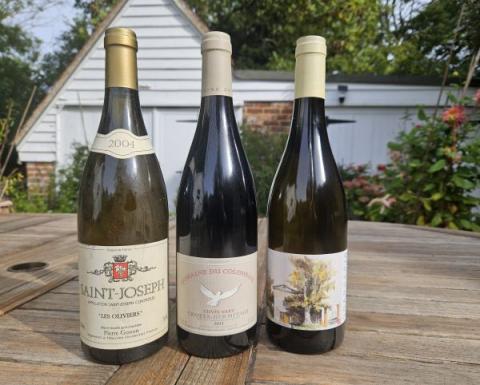
The fours often hold fluid content, are easy to drink, lacking the substance of the fives and the flair of the fruit in the sixes. Lighter coloured than the fives. Most of these fours produced very good to excellent white wines. 2024: rain into July, direct wines, drink freely, show their terroir. Joli year, underestimated quality since much of France was rainswept. 2014: fruit flies’ nightmare, reduced crop, rain and heat. Wines with clear fruit, light tannins, have an understated appeal. Underestimated quality. 2004: another rainy year, August included, precarious crop ripening. Pleasant, spiced wines, not big on body, depth. 1994: cool summer, harvest lacking ripeness with late rain, wines a little short on core, strict when young. All a bit of a struggle. The odd surprise possible due to acidity levels, as per Burgundy. 1984: high rainfall, a theme of the fours and low sun levels. Small harvest again. Light wines, tannins could be astringent. 1974: modest ripening conditions, light wines, pale colours, early fruit. 1964: the best of the fours in the last 60 years. Properly filled wines, structure with good tannic frames. Anyone for La Chapelle '64??
Theory correct here, the most convincing.
Well, perhaps there is something in what Professor Bonnefond remarked! Now, back to the laboratory and my long white coat. Salutations to all.