This Wheel`s on Fire (Driscoll-Auger): if my memory serves me well, it`s only taken 9 years for Rasteau to achieve its own Appellation status, but now it`s rolling down the road . . .
July 2010 News: well, Rasteau is now a fully fledged appellation in its own right - for its red wine. The process that started in 2002 came to fruition in early June, with the approval of the INAO, the appellation body. However, the clincher will be the further approval that this promotion above Côtes du Rhône Villages status can start from the acclaimed 2009 vintage - and that depends on "The Minister" agreeing to it before the 2010 harvest. The clock ticks on. We have Countdown! See Goings On for more of the facts, figures, thrills and spills behind this.
RECENT ADDITIONS
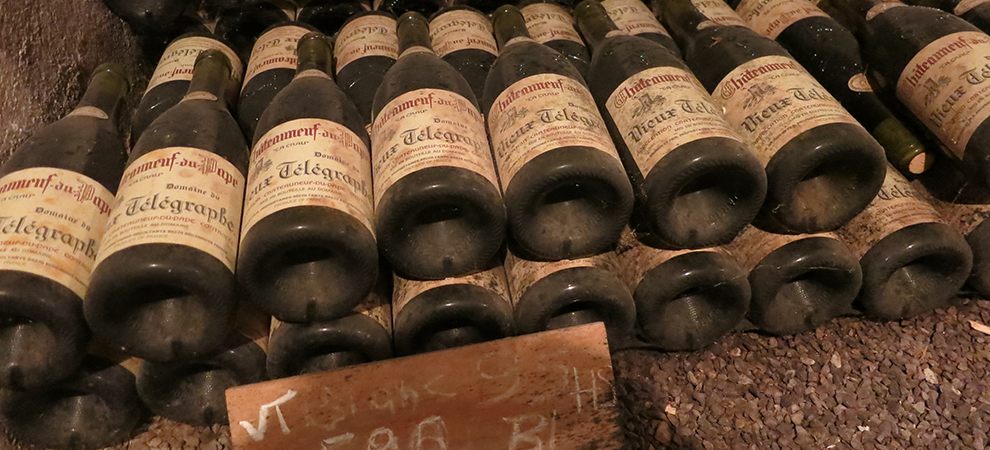
late July 2010: a first look at two leading 2009 Châteauneuf-du-Papes: Domaine du Vieux Télégraphe - including the 2009 red, and the 2008 bottled wine across the range, that includes Châteauneuf-du-Pape Domaine La Roquète. Also the 2009 and 2008 at the Bruniers` Domaine Les Pallières at Gigondas, where the Les Racines cuvée is starting to make a name for itself.
A look at the 5 main grape varieties involved in the red Châteauneuf-du-Pape Château de Beaucastel 2009 has also been included after a mid-summer visit.
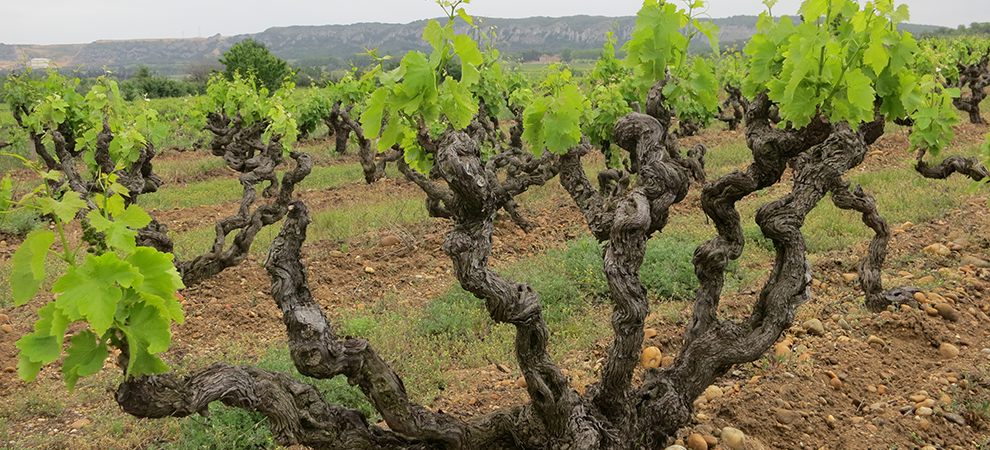
Meantime, the hot weather that started in the last week of June - temperatures into the 30s°C - has given the vineyards some impetus to their ripening, after setbacks in June from cold weather and high winds aggravating that effect. Already the enemy of yields, coulure, has hit the later ripening Grenache - the failure of the flowers to convert into fruit. There is enough moisture in the vineyards after the snowfalls and rain of winter, so unless there is hardly a drop of rain between now and September, drought should not be an issue this year.
In the Northern Rhône, flowering has occurred in tune with some of the late June heat, and at Condrieu the Viognier is set for a mid-September or early third week harvesting, according to André Perret.
June 2010 News: at last, summer has arrived in the Rhône. But the real heat delayed until 23 June, with the flowering affected by cold winds and cool nights. The fourth week of June saw temperatures rise to the high 20°sC in the South, and growers started to smile again. At present, the harvest is running 10 to 14 days behind recent dates.
May delivered a big, initial catch-up after the tardy start to the cycle. Memories of the cold winter and the very late bout of snow on March 7 receded, and the first week of June saw flowering at Châteauneuf-du-Pape, a normal date for it.
It is a curious year. When I was in Moscow in late May, the vegetation was 7 to 10 days ahead of the south of England, with high 20°s Centigrade temperatures already experienced. The Northern Rhône is further behind the South, too, with shivery temperatures in May. The gap between the two areas remains as distinct as ever.
2009 continues to look good for both red and whites - the latter low in acidity, but plumptious enough to be very good food wines. On the subject of white Rhône, I have added another noble wine, the Beaucastel 1993 Vieilles Vignes, to Veterans Corner. Yes, 1993: the year of mucho rain. The fruit from 1914 Roussanne is one of life`s eminent joys, so far off the Superhighway in an age of homogenisation. Worth an outlay at auction if you can track it down.
RECENT ADDITIONS
July 2010: two serious domaines, worthy of full attention - note the contrast in scale: the 42 hectare Côtes du Rhône Château de Montfaucon beside the Rhône near Hannibal`s point of crossing at Roquemaure and the more than double that size Château de Beaucastel at Châteauneuf-du-Pape. Montfaucon is improving all the while, while at Beaucastel the 2008s, 2007s and the 2006 red were checked in June 2010. The excellent Perrin & Fils range has also been reviewed, taking in the 2007s that are now all bottled, and some of the 2008s. See Perrin & Fils under Châteauneuf-du-Pape.
June 2010: at last, after a seemly interval, I have put up a report on McLaren Vale, South Australia, a region I visited as the International Judge last October. I cover what this vineyard zone south of Adelaide is doing with its Rhône variety grapes, which hold a big say in the area`s future. McLaren Vale is reminiscent of parts of California in being coastal, breezy, and its food and wine scene is moving towards a more organic, more enterprising approach - a far cry from the old "lager only after 5 pm, mate", mentality that existed in the past. See the left-hand tab McLaren Vale.
Look up Veterans Corner for a duo of shapely 1980s Côte-Rôties - the 1985 Gilbert Clusel La Viallière and the 1988 Bernard Burgaud. Drunk in Oslo with my old friend the importer extraordinaire to Norway and Sweden, Christopher Moestue. One sole, careful owner, and a healthy Nordic climate brought out the best in these two old stagers.
Also a trio of old white Rhônes - the rain-sodden 1993 vintage features - and also for a magnum of 1979 red Châteauneuf-du-Pape from Les Cailloux. This was my contribution to a Wine Trade luncheon held in the august, historic surroundings of the Directors Dining Room at Berry Brothers in St James`s Street, London, with original William Morris wallpaper lining the top of the wood-panelled walls, and no doubt turning a blind eye as stories moved towards the ribald.
STGT: note the Ermitage Le Pavillon red 2001 from M.Chapoutier. Also a pair of Beaumes-de-Venise reds from two family domaines, Chiniard and Grangeneuve - an encouraging sign for this still young red wine appellation.
w.o.w. note the Vieille Ferme 2009 Ventoux from Perrin & Fils - a real winner this year.
May 2010: look up Veterans Corner for a brace of mature white Rhônes - the subject of my eternal pet hobby, to get the world to appreciate them more. Also check the STGT Cornas 2005 La Geynale from now retired Robert Michel. Further STGT from the biodynamic Saint-Joseph Domaine Monier-Perréol, also.
The first across-the-appellation review has been done on Gigondas 2008, and also Châteauneuf-du-Pape 2008, both red and white. It is a cherry picking vintage, not buy anything that moves, so please read the grower comments as well to get an idea of the sort of challenges faced in its making, and, importantly, its assembly before bottling. Click on the L-H tab 2008 Southern Rhône.
2008 Northern Rhône features a review of the leading wines at Cornas. where it pays to be selective, and a charming vintage at Condrieu, from the roughly 35 wines tasted so far.
May 2010: the first across-the-appellation review has been done on Gigondas 2008, with the Châteauneuf-du-Pape 2008 to follow. It is a cherry picking vintage, not buy anything that moves, so please read the grower comments as well to get an idea of the sort of challenges faced in its making, and, importantly, its assembly before bottling. Click on the L-H tab 2008 Southern Rhône.
May 2010 News: the Decanter Wine Awards tasting week took place in the last week of April 2010 in London. The Rhône received a broad cross-section of wines, without the cream of the small estates who can sell their wines almost by allocation, so such events pass them by. Some of the smaller appellation 2007s were starting to show the dry textures of that wind-borne year, while the traditional cuvée Châteauneuf-du-Pape reds were in good form, at good prices, too. When tasting at this event, one knows the appellation and the year, but not the producer.
2008s had a dark extract when the grower was careful with the crop, but a bit anxious in the cellar - leanings towards extraction in some. But the best are agreeable, and I continue to suggest them as very good drinking wines, accessible ahead of the big surrounding vintages, at also affordable prices. 2008 remains a very good white vintage as well.
Of the 2009s presented, it was interesting to note that the better performers in the Southern Rhône were the Villages, rather than the straight Côtes du Rhônes. The former will be a very good category from the genuine domaines who know how to make unforced wines: a lot of immediate pleasure awaits with them, the length along the palate often notable.
April 2010 Cornas (cheval mascot) news: Cornas ran above his station, but was effectively very Cornasien in that he finished an extremely honourable 5th in the Irish Champion Chase, beaten under 10 lengths. When the tempo stoked up at the fourth last fence, he just got a bit puffed. Cornas - always near the top table, but never quite in the host`s chair - such has been the Ardèche wine village`s destiny over time. He now goes on his summer holidays in the west country of England, much more eco-warrior than going abroad, until he re-appears in September. Bonnes vacances, CORNAS.
Previously: Cornas gets above his station by running in the Romanée Conti Stakes, er no the Irish Champion Chase, at Punchestown, the 18.05 race on Tuesday April 20. This is for the cream of 2 mile steeplechasers, worth €87,000 to the winner. His odds are 50/1. Our country boy with 10 swells, rather, a head to head between Auguste Clape and Aubert de Villaine. He goes in good form, will try to be placed, while one of his owners is in Champagne visiting small growers rather than grande marque houses, a TRAIN ticket tucked in his pocket, the sensible fellow. ALLEZ CORNAS, allez VineTrail!!
April 2010 News: wise wine merchants are starting to accumulate a few 2008s, while finding the 2009s challenging in their youth. Meanwhile, there is plenty of debate about 2007 at Châteauneuf-du-Pape: some USA wine forums are buzzing about the Decanter Magazine tasting of 201 wines late last year, where a Day 2 panel of 9 had mixed views on the style of some of the wines, finding them overdone, especially some of the very expensive Prestige wines. In particular, the modest showing of Domaine du Vieux Télégraphe caught the attention of people, who contrasted my strong view on its quality with the Decanter result.
To fill in some of the gaps here, tasting over 100 Châteauneuf-du-Papes in half a day would be beyond anyone I know - many of them weighing in at 15 to 16 degrees. Thus 3 people each tasted 35 wines. If the trio in question liked the wine, it moved to a final taste-off by all 9 tasters. All the wines were tasted blind, I should add, in contrast to most forum commentators and the Great American critics. I did not taste the VT 2007 on this occasion, and remain with my view that it is extremely good - I have even bought some myself.
RECENT ADDITIONS
May 2010: the first across-the-appellation review has been done on Gigondas 2008, with the Châteauneuf-du-Pape 2008 to follow. It is a cherry picking vintage, not buy anything that moves, so please read the grower comments as well to get an idea of the sort of challenges faced in its making, and, importantly, its assembly before bottling. Click on the L-H tab 2008 Southern Rhône.
April 2010: a full review of 2007 Gigondas reds has been posted under 2007 Southern Rhône Leading Wines. Click on 2007 Southern Rhône, then on the tab underneath Leading Wines. Many of these Gigondas have been tasted twice, in cask and latterly in bottle, which is of course a much more reliable indicator. I am utterly suspicious of Grand Pronouncements on the wines of a vintage before bottling - cask samples can give an idea, but before the wine has been finally assembled, they can be misleading. Generally the trend I found between late 2008 and late 2009 was favourable - a majority of the wines had made progress. 2008 Gigondas and Châteauneuf-du-Pape will follow - a vintage which will gain over time, but one that is likely to receive less oaking.
Unfortunately due to illness I have not done my usual early New Year visits to the Valley, and these will resume in late spring/early summer.
At Vacqueyras, the Domaine La Fourmone has been entered: Roger Combe made a firm impression on me when I first met him in the early 1970s - here was a man who spoke (and wrote) fluent Provençal, so, like papa Frédéric Alary at Cairanne - the boys now run Oratoire St Martin and Domaine Alary, he was both a man of letters and of the soil. His daughters Marie-Thérèse and Aline were his successors on the domaine, which in 1973-74 was most unusual in an almost 100% male-dominated activity. Marie-Thérèse is now also an accomplished painter. Fourmone produces both Vacqueyras and Gigondas, and has a small merchant business that takes in some Northern Rhônes as well.
At Beaumes-de-Venise, a small, quite recent start-up, the Domaine Chiniard. A pretty good example of newcomers to wine, who work the vineyards naturally, and make their wine without artifice. In the local vein, the wines are robust, but honest, not Superhighway, and the 2007 is STGT. For Eurostar travellers who find they have a thirst on near the Gare du Nord in Paris, it is on sale at the Caves Bardou, the nearest wine shop, at 124 rue Faubourg St Denis off the gloriously named Boulevard de Magenta (salut, je m`appelle Magenta, what an intro), for €14.50.
At Gigondas new domaines posted include the very well-established Domaine Les Goubert, where Jean-Pierre Cartier prodcues an array of different cuvées across Gigondas, Sablet and Beaumes-de-Venise. His Cuvée Florence caused consternation when introduced in 1985, since it was raised for 9 months in new Vosges oak casks. Tasting of this goes back many years, so the oak effect over time can be gauged. Also the small scale Domaine La Bouscatière, with STGT tendencies, and the promising STGT, whole bunch Domaine Les Chênes Blancs, the reliable Cave de Gigondas and Bertrand Stehelin.
A trio of very sound domaines, as well: at Rasteau, Domaine des Coteaux des Travers, and its robust wines. At Beaumes-de-Venise, the Domaine Saint Amant, pioneers in high altitude Viognier in the Rhône, their red wines making recent progress, with the astute Camille Wallut at the helm. And at the much blighted Tricastin, having dropped the cumbersome Coteaux du and after nuclear mishaps having also applied unsuccessfully to change the name to Côtes du Rhône, the leading property Domaine de Grangeneuve.
A note of interest for lovers of Hermitage: a vertical of Domaine du Colombier 2002,2003, 2004 and 2005 from late last year: the striking point was that, despite the vineyards not being on the most nbole west end of the hill, each one faithfully reflected its vintage. Colombier is listed under the Crozes-Hermitage appellation.
mid-March Cornas bulletin: our mascot horse performed exceptionally in the 2 mile handicap at Cheltenham, the Grand Annual. Quietly ridden, he crept fom midfield of the 21 runners in steady rain that had softened the ground. By the top of the hill, with 3 fences left, he had moved forward to 6th. As they approached the last fence there was a group of 4 horses in contention, with Cornas carrying the most weight of those in the running. Just in the last 50 yards, on the soft ground, did our mascot horse`s stamina peter out, and he finished fourth, beaten about 5 lengths at odds of 16/1. Those who backed him each way will have made a profit. Quite a run. It was a tough assignment, but he did not shirk it. ALLEZ CORNAS!!
March 2010 News: steady, boys and girls. I feel 2009 fever is mounting, before we have even had the chance to sup or savour some of the 2008s. Do not write off 2008 - just be extremely careful about what you buy. It is not a vintage where en primeur should really play any role: wines offered from November 2009 were in no way fully completed, and 2008 is a year where the grower`s judgment about what to discard - grapes and wine - and what to blend was paramount. That blend - or assemblage - is the last crucial step in the process of eking out quality in a weather-affected vintage such as 2008, and until it has been performed, and the wine tucked away in bottle, we are effectively in the dark. This comment applies just as much to a Côtes du Rhône Villages name as it does to Jean-Louis Chave and his red and white Hermitage 2008, by the way.
That is why I have tried to post up simple wines which are finished, and which do reflect authentic local styles. The whites can be great, and the unfussy reds delightful. Areas that have done well include Gigondas in the South, Cornas in the North. Gigondas as a later ripening region particulalry is favoured in a vintage such as 2008, as it was in 2002, when the rains fell and fell in early September. Keep looking for the LVT 2008 tag against domaines, indicating the tasting of their 2008s already.
This month sees the start of more tastings and dinners, as wine merchants emerge from their igloos, and the singing of the birds portends warmer days. It is also the month of the super-charged Cheltenham horse racing festival, which may feature our Cheval Mascot, the mighty Cornas, running in the last race of the 26, the Grand Annual Chase handicap over 2 miles. News on him will be posted for his aficionados. Meanwhile, I have to fend off greedy French growers, all of whom will claim that I had an annual bet against France in the 6 Nations Rugby Tournament - so far France have won all 3 of their matches. Fortunately, I backed them so to do before it started, so have wriggled out of a tight corner and can continue to sup the odd good bottle.
RECENT ADDITIONS
early March 2010: a report on Les Vins Naturels has been added under Recent Tastings. It focuses on the domaines of Dard & Ribo at Crozes-Hermitage, Domaine Gramenon in the southern Côtes du Rhône, and Jean-Michel Stéphan at Côte-Rôtie. These are low intervention growers, who work purely organically, down to little or no use of sulphur dioxide during fermentation and raising.
A few Southern Rhône domaines recently added: in the Côtes du Rhône, two prime organic estates, mother and son: Domaine Gramenon, and the new domaine of Michèle Aubéry-Laurent`s son, Maxime, under the title Maxime-François Laurent. At Rasteau, the Domaine de Beaurenard - the Rasteau offshoot of the Coulons` accomplished Châteauneuf-du-Pape estate, and at Ventoux, a promising, well above average quality property, the Domaine Champ Long, who are cousins of the Bernard family who run the Domaine La Garrigue at Vacqueyras and the delightful Hotel Les Florets at Gigondas.
During February a lot of 2007 and 2008 tasting notes on Gigondas have been added - the 2007s now mostly in bottle, and the 2008s out of the vat. Domaines now present at Gigondas are Notre Dame des Pallières, where quality is rising, the Mas des Flauzières, where quality is also on the rise after excessive extraction in the early 2000s, the also improved Domaine de la Mavette - more body in the wines than 10 years ago - and the small start-up the Mas des Restanques, whose owners are ex-Co-operateurs. Good marks for the class of Gigondas!
At Châteauneuf-du-Pape, two recent newcomers have also been put up: Albin Jacumin and Domaine La Destinée. Albin is part of the soap opera saga - think the 1980s TV programme Dallas, perhaps - surrounding the Château de Cabrières, where lawsuits are flying over inheritance after the divorce of the Arnaud parents. His old 10 hectare Domaine was called La Bégude des Papes. He will become a grower of importance by 2011, with over 20 hectares in total due to come his way - providing the lawyers do not slow the whole thing down. More simply, but interestingly, Domaine La Destinée`s owner Jean-Pierre Folliet came to wine via being a Professor of Tasting, and has a wine shop as well. His wine is good and traditional.
Around the Côtes du Rhône Villages, there are some new names. Set on the Plan de Dieu, the Château La Courançonne has always been good supplier of white and red Séguret, with the Villages wine of Plan de Dieu now stated on the label. Under Côtes du Rhône, in the lower part of the Drôme département, a new domaine, the Clos des Cîmes, first vintage 2007, has been entered - two young people, both oenologues, but one with viticulture in her family, an ex-Co-operatrice. Also under Côtes du Rhône, very near Avignon, the Domaine Saint-Pierre d`Escarvaillac, owned by the Requin family since 1889, has been posted.
Across the river, at Laudun, the Château de Marjolet is a recent name for Laudun red, while the Château de Montfaucon is a very good source of Côtes du Rhône, especially the more full-bodied wine. Also in the Gard, in the accomplished village of Domazan, the Domaine des Romarins has been added, with authentic, robust wines as their trademark. Another start-up in the right bank Gard département is La Gramière, makers of Vin de Table from Côtes du Rhône vineyards, with a US involvement. In the southern Ardèche, the high quality Vin de Pays estate Domaine du Grangeon has been added, with good value wines.
All on its own, for the eclectic, the well-off, the curious: the 2005 Château-Grillet was solemnly tasted over 2 days, to assess and enjoy and appraise this little piece of history, whose style is changing.
late-January 2010: 2008 vintage entries: keep using the Search vintage 2008, or look out for the LVT 2008 (Last Vintage Tasted) acronym alongside domaines. Some of the preferred ones have been entered recently. Few wines achieve 4 to 5 star ratings in 2008, but there are plenty around the 3 star mark, which can be good value from regions such as the Côtes du Rhône and Gigondas.
At Châteauneuf-du-Pape, a few high-class estates have been brought up to date: Domaine de Beaurenard, Domaine de Cristia, Château Rayas, while the Gigondas-owned Château St Jean of Christian Meffre has been added. Over 30 white 2008 Châteauneuf-du-Papes have also been entered - look out for LVT 2008 wh under the domaines.
A couple of right bank Côtes du Rhône domaines have been entered, both at the village of St Marcel de l`Ardèche, and both run by talented women - the Mas de Libian of Hélène and Catherine Thibon, and the Domaine Coulange of Christelle Coulange, the latter taking the brave and realistic decision to sell off all her 2008 in bulk.
At Cairanne, a quartet of domaines, two very established, the others new to quite new: the racy fruit and fun of Marcel Richaud, the Belgian-owned debutant Domaine de la Tête Noire - both offer w.o.w. wines - and the Domaine Armand, with sound Rasteau as well as Cairanne. Also the Domaine Catherine Le Goueil, now making just one wine, called simply Cairanne - a robust wine.
At Sablet, the Jean-Marc Autran Domaine de Piaugier, an innovator 20-plus years ago with oak use and a cleaned-up vinification - Sablet (inc good white) and Gigondas on offer from a wide range of cuvées. Also at Sablet, the Domaine de Boissan of Christian Bonfils, a go-go contemporary of Autran: good Sablet, also good, elegant Gigondas, with some very old vintages reviewed.
At Gigondas, the recently started Domaine des Florets of Jérome Boudier, up past the great hostelry of Les Florets - so in the lee of the Dentelles - has been entered, along with the definitely promising Domaine du Grand Bourjassot - very sound wines from Gigondas and Sablet, with at Vinsobres, the steady Domaine Autrand.
In the Côtes du Rhône, the exotic younger brother of Château Rayas, the Château de Fonsalette, had had its 2008s and 2007s reviewed. Also added are two modest domaines - Domaine du Bois des Mèges at Violès, and the keen start-up of Domaine Gris des Bauries at Taulignan, in the southern Drôme. Likewise at the Côtes du Rhône, the easy drinking wines of Domaine de la Berthèthe near the Plan de Dieu. In the Villages at Laudun, the reliable Co-operative the Quatre Chemins de Laudun has been added - good, fruity wines.
On its own, the appellation of Brézème south of Valence, has been included, the home of good Syrah: this I placed in my book The Wines of the Northern Rhône as it is out on a limb, near the mouth of the River Drôme as it nears the mighty Rhône, having passed through what is some spectacular country east of Crest ("Crey"). Jean-Marie Lombard is the main grower, although Eric Texier, the merchant, is also active and productive there.
Also just brought up to date at Hermitage, has been the STGT grower and near-veteran, Bernard Faurie; he also makes Saint-Joseph, and his 2008s and 2009s have been inspected. The complete line-up of wines from Delas - their 2007s in bottle, and some of their leadings 2008s have been fully reviewed: this remains a house with a very high quality given the number of wines they produce. At Crozes-Hermitage, the offbeat duo of René-Jean Dard and François Ribo (Dard & Ribo) have been visited, with their w.o.w. and STGT wines including Crozes, Saint-Joseph and Hermitage. Plenty of 2009 cask samples were also tasted chez eux. The 2008s and 2007s of Yann Chave, much more mainstream, have also been reported on, as have the 2009s, 2008s and 2007s of Luc Tardy at Domaine du Murinais - also a modern, clean as a whistle fruit operator. At Cornas, the full range of wines from Jean-Luc Colombo - his Cornas 10 hectares, Saint Péray 2 hectares and the négociant wines from north and south - have been tasted and entered, including some interesting whites. At Saint-Joseph, the modest local domaine near Chavanay, Domaine Richard, has been revised, while at Côte-Rôtie, some impressive 2006s, 2007s and 2008s have been tasted at the Guigal-owned Domaine de Bonserine.
February 2010 News: snow hit the Rhône in January 2010, with a foot or more at Gigondas (40 cm) and falls all over the Valley. Good news for the water table, although pruning was a little held up in difficult to access places. In the cellars. growers are working on their 2008s, a vintage in which throwing away any suspect crop was obligatory, but also one where the blender`s art comes to the fore, and fine judgment is needed to provide wines that are reasonably balanced and good to drink without any stiff or jagged notes. I continue to be interested by simple, hand-made 2008s from Côtes du Rhône and also the small wines from successful estates - which can include vins de pays as well.
Beside 2008, 2009 is a boastful, glitzy vintage, with immediate impact fruit and a lot of content. Show biz hits town! All I would advise is to go carefully in buying at an early stage - vinification was not always straightforward - there are some enormous degrees on the Southern Grenache - and growers may have that pecuniary glint in their eyes - a low yield this year, coupled with a frothing media, means prices will rise, nae doubt about that. Only if Greece really hits the buffers may importers see some relief on the € Euro front.
This month, more 2008s will be entered, and the picture of a vintage that follows a known Rhône pattern - a lesser red year equals a good white year - will also be further unfurled.
Cornas (cheval mascot) news: it is slightly back to the drawing board for our steed. He finished 5th, about 25 lengths behind the top-class winnee, the ex-French Twist Magic in his big race at Ascot. Ex-French, eh. Restez chez vous, svp. He tried to mix it with the two best horses and got tired, and was thereafter allowed to come home gently. Plans are now under discussion, since he is not quite in the top league, but is good in the second grade. Having said that, he would still feature in the best 12 steeplechasers over 2 miles in Britain - not at all bad. But the analogy with Cornas - gallant and honest - remains true. Allez Cornas!
January 2010 News: a very Happy 2010 to readers and subscribers. We can look forward to some fun drinking in the next two or three years. From the Northern Rhône, there are the free-flowing 2007s, some fine, interesting 2008s from selected domaines, and an excellent bunch of 2009s, jam packed with fruit, that are likely to show well early. The Southern Rhône offers the imposing, bountiful 2007s, some very drinkable 2008s - although these are lower level wines that often fit into the w.o.w. (what one wants) category - and a strong collection of muscled 2009s. Lovers of easy drinking wines, and hoarders and sippers of big beasts are all catered for.
It will be interesting to see what happens with the style of some Southern Rhônes over the next few years. There has always been a gulf between what one might loosely term the typical European palate and the typical North American palate, and this difference has been brought into very sharp focus with the issue of the 2007 vintage at Châteauneuf-du-Pape. I have actually witnessed a professional taster, spitting all the while as per usual, physically crumble after going through 30 or 40 of the 2007s at a public event. Is this a good sign? Even in the USA, a lively divergence has opened up between Eric Asimov, the New York Times wine correspondent, and the Sage of Maryland, Robert Parker jr. Finesse or power? Can you indeed offer finesse when the degree exceeds 15°? Are growers copping out when they lament the rise in ripening season temperatures, but also know that this style of wine sells very well in certain markets - so why kick against the trend? I cover this point in the March 2010 issue of Decanter magazine, by the way.
During January 2010, I will write a piece on "les vins naturels" - those wines made with little or no sulphur during fermentation, raising and bottling. By nature, these should be wines that hover between the two categories of w.o.w. - easy drinking - and STGT - faithful expression of place. I will ponder the merits of these laissez-faire wines from a Rhône standpoint, and also point to side issues that accompany them, such as their stability. Domaines referred to will include Thiérry Allemand (Cornas), Dard & Ribo (Crozes-Hermitage), Domaine Gramenon (Côtes du Rhône) and Jean-Michel Stéphan (Côte-Rôtie).
December 2009 News: the 53rd Cornas Wine Fair, or Market as they call it in their functional way, is the early December highlight, and features among a welter of tastings of 2008 Northern Rhônes in Tournon, along with similar close inspection of 2008s at Gigondas, Lirac and Châteauneuf-du-Pape. Comments on these will be posted later in the month. For now, having tasted a wide selection of Châteauneuf-du-Pape 2008s, I find they carry friendly fruit, and will drink young, but they are miles better than 2002, which some armchair-bound journalists have wrongly put in the same category as 2008.
Something I have also noticed is the rather heady pricing on two prominent Châteauneuf-du-Pape estates, Clos des Papes and Beaucastel. I have not tasted the Beaucastel, but in December tasted the Clos des Papes at the estate in, please note, its yet to be assembled form. Please log in to see the note on this wine to be. What I also observe is that both these 2008s are being offered, in all their infancy, pre-final blending, at £400 per case of 12 bottles, in bond in Britain. Thus there is duty, shipping and VAT to be added; they therefore weigh in as expensive wines, which will have to do well to justify the price in what is not a great vintage. The old caution of Caveat Emptor (buyer beware) must apply for those who wish to rush in.
Cornas (cheval mascot) alert: the mighty Cornas WON by 13 LENGTHS (13 longueurs pour ses fans les vignerons) in his 2mile, 1.5 furlong steeplechase for younger horses on Dec 17 at Exeter. He was actually joint favourite at odds of 11/10 and eased round, jumping accurately, and won without being fussed by his rivals. His sore hoof (the first four letters of his name, actually) had been attended to, and he prevailed in style. I vaguely cheered him on from minus 15 Centigrade in Finland while discussing the merits or otherwise of the Finnish economy, (unemployment rising in 2010), while the race was run, without my usual bottle of 1991 Clape Cornas to hand. Probably just as well. ALLEZ, CORNAS! His fan club grows all the while, and I took the opportunity of informing the Mayor at the December Cornas Wine Market that his foreign ambassador had 4 legs, and a much higher profile than him. He took it in good part.
RECENT ADDITIONS
December 2009: back from the Rhône, just, without sleeping the night in a snow drift near Brighton, from Helsinki, the first 2008 tasting notes are being gradually fed in. It is a vintage that needs micro-investigation - what the French term "le travail de fourmi (the work of an ant). No blanket statements can be made. Each domaine must be judged separately. Under Saint-Joseph, notes on the whites of Domaine Bernard and Fabrice Gripa should be looked at. Under Hermitage, the 2008s of Marc Sorrel, and his 2007s, all of which are now bottled, are also reviewed. Also under Hermitage, the new venture Nicolas Jaboulet, Perrin Frères has been added, a merchant business that started in August, 2009, and released its first wines in November, 2009. Under Cornas, the 2006, 2007 and 2008 (in cask) of Thiérry Allemand have been tasted in December chez the enfant terrible.
Under Condrieu, the Domaine Georges Vernay range was tasted, including a 1976 Coteau de Vernon, which is also covered under Recent Tastings under the title 1979 & 1976 Georges Vernay. And the Domaine Faury has been updated, their whites from 2009 and 2008, their reds from 2008 and 2007. At Côte-Rôtie, the organic, sometimes no sulphur child Jean-Michel Stéphan and his range of 2007s, 2008s, 2009s have been entered. Jean-Michel is a rare example of carbonic maceration use, his inspiration being the late Jules Chauvet of justified past Beaujolais fame. Also the highly promising Christophe Billon`s 2007s, 2008s and 2009s have been reviewed, as have the 2009s, 2008s and 2007s of another young Turk, Stéphane Pichat, and the traditional Domaine Gallet.
mid-November 2009: starting to be fed in are STGT and w.o.w. wines tasted in the Rhône this month, along with the first 2009s, notably the whites. Look for any STGT wine with 11/09 as the tasting date. The vins de pays 2008s are shaping into very good value, easy drinking wines - there are some under the w.o.w. bracket, and right good they are, too. Domaines visited and written up so far are at Condrieu, the two Frankies - François Merlin, and François Villard, along with the nicely local, STGT-leaning Marie & Pierre Benetière. One of my first ever visits to Condrieu in June, 1973, was to Pierre`s brother who was then a négociant in the regional wines, and thus one of the few people dealing in finished wine in bottles at the time. My domestic drinking in Aix-en-Provence was the starred litre bottle, plastic top, Ventoux red and rosé from the Cave de Beaumes-de-Venise, about 80 centimes a pop if I remember rightly. Bottles with corks were for big hitters, pas moi. I did have a few pairs of smart espadrilles, though, even if not in the I Marcos league.
At Côte-Rôtie, René Rostaing and the brothers Bonnefond, Patrick & Christophe have also been revised. At Saint-Joseph, neighbours Emmanuel Barou, Pierre Finon and Pascal Marthouret, the first two successful with vins de pays and Finon especially with his whites, the last-named in the w.o.w. camp. Also Louis Chèze, up on the plateau at Limony, whose domaine has almost become an empire since he started in the 1980s, and Domaine du Chêne at Chavanay.
At Séguret, the ever reliable, good quality Domaine de Cabasse, also a hotel in the summer months, has been added, as has a small but active enterprise at Ventoux, at the village of Le Barroux, St Jean du Barroux. (Mass in the chapel just outside the village there is spoken in Latin). At Plan de Dieu Côtes du Rhône Villages, a young man with a small vineyard, Hervé Bessac, is a new entry, as is the large 70+hectare Côtes du Rhône estate at Suze-la-Rousse, Château La Borie, provider of well-fruited wines. Another good domaine with clearly-fruited wines is Domaine Marie-Blanche at Signargues, one of the recent Côtes du Rhône Villages.
Cornas (cheval mascot) alert: please reach for your nearest bottle of Cornas. If you don`t open it, at least touch it. Whisper to it, hum at it, intone positive thoughts towards it. For our steed is running at Ascot on Saturday 21 November, in a £34,000 9 runner handicap steeplechase over 2 miles, 1 furlong (1 furlong = 1/8 of a mile, thus 220 yards). The race starts at 2.05 and is on Channel 4 in GB. He has the top weight and is meant to be the classiest horse in the race. His trainer was keen to run to him, saying he is in good form at home. I expect a gallant showing, but he may be finishing second or third. His odds are 4 to 5/1. Allez, Cornas! LATE WIRE: Cornas finishes third, an honourable run, but never really in the front rank. Well run, Cornas. The bottle of 1991 Cornas Auguste Clape that I got out of the cellar helped to some extent, it would seem.
November 2009 News: growers report their 2009s as fermenting well, but in the southern Rhône, some vats have started to take their time, so loaded with sugar have they been. The malolactic fermentations have been remarkably quick to occur this year - the drought and hot summer meant there were low levels of malic acidity, with some "malos" taking place before the primary, alocoholic fermentation had finished - something very rarely experienced. In the Northern Rhône there appears to be considerable enthusiasm about the new vintage, both from a quality and a quantity standpoint. In the Southern Rhône, there are also great hopes. An issue yet again may be that of low acidity wines with high levels of alcohol, which could prompt more than desirable cellar intervention. We will see. I have visits to the Rhône before Christmas, and will be reporting back on both 2008s and some early impressions of 2009.
Cornas (cheval mascot) alert: Cornas ran a most honourable second in a Grade 2, hot handicap steeplechase at Exeter on 3 November. I was, ahem, drinking 2001 René Rostaing Côte-Rôtie in London at the time, so apologise to our Cheval Mascot for such negligence. Would he have won (beaten 3 lengths) if I had been drinking Cornas, or indeed, if we had organised readers to ALL drink Cornas that day? His jumping was apparently good, and he went down fighting. One report that the jockey had "tack trouble at or near the last fence" is a little alarming - do vignerons drop their pipettes? So Cornas ran up to expectations, also having been backed rather heavily from 12/1 into a starting price of 5/1. Maybe his fan club is growing. Meanwhile, his daring owners, the Vine Trail crew, have returned from Melbourne after watching another of their equine empire, Capecover, like Cornas a New Zealand bred, run in no less a race than the Melbourne Cup - the race that stops a nation, the race that creates a public holiday across Australia, making it doubly popular. Drawn in stall 19 - wide - he will be finishing strongly, as he likes to make his move late. How late is late? - a Hegelian question for this Sunday morning. The answer I'm afraid - late in the absolute, metaphysical sense: 17th of 23.
late October 2009 News: I am nearing the end of an instructional and entertaining visit to the vineyards of McLaren Vale, South Australia. The Vale lies south of Adelaide, has a breezy, maritime climate, and the majority variety in its vineyards is Shiraz. I have been the International Judge at the McLaren Vale Wine Show, an event that runs over two and a half days. There is definite potential for this region to become better known in future years, and there are encouraging moves such as a series of six sub-regions - McLaren Vale, McLaren Flat, Blewitt Springs, for instance, to be created - a sort of mini appellation network. This is very reasonable, given the diverse soils and rock sub-strata here. A precise map logging the geology is in preparation, and there are definite signs that a good amount of the growers see the need to make more precise, less blockbuster, "me-too" wines. I have also been impressed by the pure Grenache wines I have encountered. A full Report will follow in the future.
For lovers of mature Châteauneuf-du-Pape, I would also remind you of the very extensive look at the 1998 vintage posted recently under RECENT TASTINGS. I will be in the Rhône in the next few weeks to see some of the first vat samples of 2009, and to take a good look at how the 2008s are faring.
Meanwhile, I apologise for the weird encryption, a grown-up word for gobbledygook, on some domaines, which is a result of recent changes on the site. These are being attended to, and the domaines affected will be back in full shortly.
JEAN-LUC COLOMBO: not a great month of October 2009 for the free-wheeling Wunderkid of Cornas. See Goings-On.
CORNAS, cheval mascot, alert: Cornas travelled to the west of Ireland for a very winnable 2 mile steeplechase on 11 October, and was made favourite for the contest. He jumped like a tiger for the first 5 or 6 fences, but unfortunately his pilot asked him to be too bold and to jump too extravagantly at a back straight fence and he took a crashing fall. Very happily, he and the rider seemed OK after the race. Back to the drawing board for our Cheval Mascot, thus. A bit like Cornas, the wine - never really the King at the Rhône Annual Ball, despite good mentions by the cognoscenti and off-beats. Team Cornas have had to stick to the Guinness, but it is now called la bière des chuteurs, not la bière des vainqueurs, as it used to be termed during my days in the Cameroun, West Africa. Don`t say that out loud, by the way.
October 2009 News: the last crop is being picked, and the scene is set for a very good vintage. It was predicted here, it`s all in writing. If only I could back winners using these forecasting methods! Rain on 16 September was a fantastic boon for the growers, since the vines had started to seize up, with sugar levels rising, but tannic maturity not following. Reports also emphasize a loss of crop that is severe in places such as Gigondas, and overall quantity is well down on "normal" years - the last one of those was 2007. In the meantime, the fruity charms of the best 2008s are coming through, acting as a welcome easy drinking pause between what will be considered to be two very good vintages.
Recent Additions: a long and winding report on 1998 Châteauneuf-du-Pape - 10+ years on - has been posted under RECENT TASTINGS. I set the scene at the time of the vintage so there is a full context surrounding the behaviour of the wines as they mature. See GOINGS-ON for other recent additions, which include the now complete report on 2007 NORTHERN RHONE.
September 2009 News: a very hot August has marked its path through the vineyards, resulting in some blocked ripening here and there. In this situation, the vines need moisture to continue the ripening of their tannins - stalks, stems, pips can vary between green and yellow, and this makes life difficult for a grower to press the harvest button. Thunderstorms have occurred, but are very localised. Patrick Coste of Domaine Le Pointu at Châteauneuf-du-Pape related how in late August the north of the town of Orange was temporarily flooded after a thunderstorm, while his domaine, just south of Orange, received no rain. The first picking of white grapes and those intended for rosé has started. See Goings-On for the latest news.
Taken as a whole, the outlook is bright in both the Northern and the Southern Rhône, but rain would help to bring balance to the vintage - otherwise the spectre of firm tannins arises.
Recent Additions: most of the 2007 Northern Rhône vintage report has been completed - see the sidebar 2007 Northern Rhône. Domaines added at Châteauneuf-du-Pape include Roger Sabon, Moulin-Tacussel, Lou Fréjau, de l`Harmas, Panisse, Vieux Lazaret and a handful of fairly recent start-ups - La Ferme du Mont, Bouvachon-Nominé, Le Pointu. At the Massif d`Uchaux, the interesting Château d`Hugues, run by the exotic character Bernard Pradier, is also included.
August 2009 News: reports from the vineyards are extremely encouraging. July was hot and dry, and a little rain at the start of August most welcome. By the first week of August, temperatures in the southern Rhône soared, with 38°C recorded at Châteauneuf-du-Pape on a very still August 5 - not a breath of air. By and large, harvest dates look like being about one week ahead of their usual dates, with the Syrah in the South rocking on at speed. Please click on Goings-On for some comments from different growers across the Rhône Valley. In England, the south-east, which includes my home territory of Sussex, has fared better than the Midlands and North, which have been beset by rain recently. Runner beans are thriving.
Tasting notes of 2007s from Gigondas and Vacqueyras are gradually being fed in, while the summary report on Northern Rhône 2007 is coming to fruition, gradually. The individual notes have been supplied under each domaine - please use the LVT (Last Vintage Tasted) indicator to track that under each domaine.
July 2009 News: growers up and down the Rhône tell me that the growing season is going well, smoothly, and that harvest dates at this juncture look like being on the early side. They have had none of the drip-drip weather that led to widespread mildew in 2008, and are as hopeful as they can be before the all-important months of July and August. As it has in Britain, the weather in June in the Rhône has been hot, but water reserves are fuller than they have been for a few years - so, touch wood, things are looking promising. The good feeling about the 2009 vintage continues.
June was sad in that Châteauneuf-du-Pape lost one of its most senior figures, Paul Avril of the Clos des Papes - see Goings-On for my little obituary on Paul, an outstanding ambassador for the region, and a charming man of poise and intellect. Alsace also lost its great ambassador, the ebullient Jean or Johnny Hugel. With officialdom and big business systems stifling more and more of the characters of the wine trade, these are the sort of people who nowadays stand out for their drive and enterprise, both Avril and Hugel men who represented "lesser" regions of France thirty-five years ago when I first met them. It is fitting to think that now neither region is in any way "lesser".
Recently posted items include domaines from Cairanne, Costières de Nimes, Rasteau, Roaix, Signargues and Ventoux - see under those appellations. In constant renewal are the central drinkrhone categories of STGT and w.o.w. - Soil to Glass Transfer wines and what one wants wines. Refer to these (date tasted in right hand column is a good indicator of recent activity) for natural, terroir wines or easy drinking, free-flowing wines. A cross-section of 2006 and 2007 wines from Vinsobres have been entered, while the next project is the full report on the 2007 northern Rhône. For the full list of domaines recently posted, see Goings-On.
June 2009 News: les anciens will be sitting round the camp fire, mumbling about how the weather they anticipated a good while ago has come to pass - heat, sun, abundance. I hope they have handy supplies of rosé handy, but I expect their dish is more a Syrah or Grenache-inspired red. Having just celebrated two major and marvellous events, the Yapp 40th anniversary of their existence as the leading Rhône and Loire wine merchant in GB, and the Tim Johnston (Juveniles, Paris, famous for many a good bark at annoying people or regions near the Gironde, including the ejection of the Mondovino team onto the trottoir outside Juveniles, an event written up, no less, in the stately Revue de Vin de France) ?40th birthday luncheon - GOODNESS, this is a long sentence, but the home straight is in sight - I can testify to the refreshing qualities of the 2007 Tavel rosé La Forcadière from Domaine Maby (http://www.yapp.co.uk/) and the utterly delightful 2008 Château de Roquefort Côtes de Provence Corail rosé from the excellent biodynamic estate of Raimond de Villeneuve near La Ciotat, south of Marseille (http://www.leaandsandeman.co.uk/).
I have posted a review of 2008 Tavels under Recent Tastings. I find 2008 a really great rosé vintage from the Southern Rhône and Provence, providing the grower has been realistic and not pushed for too much extraction. There is no need for many of these wines to exceed 13 degrees, in which case the best are gorgeous to drink outdoors - great for the aperitif, picnics, barbecues and so on. Ship `em in, I say. There is also a recently posted full report on the 2007 Northern Rhônes. I am still grounded after knee trouble, so the dinners in the Rhône have been held over until 2010. Note that a few 2008 vat sample tasting notes are appearing after domaine visits made between December 2008 and March 2009. A full list of recent domaine additions is under the Goings-On tab in the left-hand margin.
May 2009 News: some optimism is appearing about the 2008 vintage, notably in Bordeaux. The Rhône is mercifully spared the annual fiasco of pubescent wines being assessed by the great and the good when some of the wines have not even finished their malolactic fermentation - or if they have, they may well have been in heated cellars to get to that stage. Nor have final blends been decided upon. It is interesting that the wines flying off broker`s lists in London are the Premier Grand Crus, plus the usual Lynch Bages, Léoville Barton very reliable wines. The Merlot wines of the Right Bank are also starting to hot up.
I have posted the notes from a Chapoutier 2008 tasting held in London at the end of April in the next days. See Recent Tastings. This was all the parcellaire or single plot wines, the reds 100% Syrah, the whites 100% Marsanne. I would always prefer to taste in the cellar of the grower rather than from a sample shipped away from its region, but the results were quietly encouraging, with terroir coming through in some instances from this cool vintage: a really hot year like 2003 of course suppressed terroir in its first years. Here and there on the site are a few 2008 notes from the odd vat of Grenache or Syrah that I have included for interest`s sake, rather than a formal assessment.
Recent additions: a full report on 2006 Northern Rhône has been posted, and a host of Northern Rhône domaines from the last 5 months - see Recent Additions in Goings-On. Also, the top 4 2005 Côte-Rôtie wines from Guigal, which were bottled at the end of January, tasted in mid-March in Ampuis. Also, the latest from Domaines Bernard and the organic, counter culture Jean-Michel Stéphan at Côte-Rôtie - both have vineyards mainly in the southern sector there. The Domaine Guy Farge at Saint-Joseph has also been added - Guy being an ex-Co-operateur (Tain) who now makes Saint-Joseph from good vineyards at St-Jean-de-Muzols and also Cornas (allez!)
I note that the Meteorological Office in England is now forecasting a long, hot summer, something this website was on about at least two months ago. Listen to les anciens, the veterans, and get out more is my comment to them.
April 2009 News: 2008 has performed in a usual Rhône way - providing good whites and likeable rosés, the latter less heady than recent vintages. Thus the aperitif can be drawn from Tavel and neighbour Lirac, or from some of the enterprising Côtes du Rhône domaines which take trouble over their rosés. Notes on Tavel will be posted in the next weeks. See Goings-On for news of an award given to me by the growers of Vinsobres last month.
The third week of April 2009 was the stage for the Decanter World Wine Awards, which involved a large amount of tasting over four days in London. This year there were more Rhône entries for the Decanter event than ever before this year, and the number of gold medals given doubled from last year`s tally of two to four. Their identities will be revealed in due course - I do not know yet who made them since the wines were all tasted, and re-tasted blind. There was one 2008 white, and three 2007 reds.
Recent additions to the Northern Rhône feature three new domaines of good quality each one: the saucily-named SCEA La Tache at Saint-Joseph, Christophe Curtat at Saint-Joseph - both in the prime southern zone of that straggling appellation - and at Crozes-Hermitage Domaine Saint Clair, of Denis Basset. Please also keep checking the STGT and w.o.w. categories as tasting notes on 2007 are being fed in. Notice that Crozes 2007 from good domaines looks like delivering really friendly fruit, classic for w.o.w. However, there are a lot of got-up wines as well from Crozes. Also check out the rock solid qualities of the Domaine Durand at Saint-Joseph (and Cornas), and the Domaine Belle at Crozes-Hermitage (and Hermitage).
Also recently included has been a vast array of Chapoutier wines, also those from their offshoot Ferraton (both listed under Hermitage), Marc Sorrel from Hermitage, and from Crozes-Hermitage, Alain Graillot, with a first look at his 2008s, as well as the wines of his son Maxime, at his Domaine des Lises - a name to remember.
Cornas (Cheval) News: our Cheval Mascot ran on Saturday 4 April at Aintree, near Liverpool, in a 2 mile novice chase event that preceded the world famous Grand National race. He finished fourth in this championship race, and was bang there until the winner quickened away to win by 12 lengths - presumably it is a Bessards/Méal style beast, that Kalahari King, while Cornas is, well Cornas - honest virtues and a real trier. He is off on his summer holidays now, with some lush turf to pick at. Repose-toi bien, Cornas.
He had been skipping around at his home in Devon, and clearly likes the spring weather that Britain has recently enjoyed. Fingers are crossed, but once again he crosses swords with the best beasts around - a reprise of his race at Cheltenham last month, when he finished seventh after slipping on landing two fences from home. The flat racecourse at Aintree will suit him a little better. Auguste Clape has not yet been informed of Cornas` next outing, but was in grand form when seen two weeks ago tasting with the crowd in Tain l`Hermitage. ALLEZ CORNAS !!!
End of March 2009 News: the bi-annual Découvertes en Vallée du Rhône event was its usual whirlwind of colourful people from around the world, and the gang of journalists that meets up every two years - notably from Belgium and Denmark - which results in late night assaults on STGT Montlouis and other delights. Visitor numbers were down, unsurprisingly, but the audience was more professional and focused than in 2007. The USA and Canada were well represented, as were Belgium, Norway and Germany. British trade visitors were low in number, high in quality - Averys, Flint Wines, Berry Brothers - the last-named continuing to outpace most of the British traditional merchants through their commitment to the real Rhône of small domaines and good quality names that now include Beaucastel. London merchants that rely on Bordeaux have hard yards to catch up, especially after a less than star vintage in 2007.
The main focus was the 2007 vintage. The southern Rhône will be covered in detail in the coming weeks as I reside in England and scribble away. It will start with a bringing together of the Châteauneuf-du-Papes, red and white: many of these have now been tasted. Please also keep consulting the STGT and w.o.w. categories, where wines are being added all the time.
mid-March 2009 News: the bi-annual Découvertes en Vallée du Rhône event takes place from March 16-21. This is attended by wine importers, retailers, press and a few way out investigators - two years ago there was a VERY hearty bus of Slovakians who would all taste the same wine at the same moment, it appeared. Traffic problems ensued, and noise levels were high. Did they place many orders? I cannot say. It is that time again, and bookings will probably be down on 2007 - we will see. Reports will be posted the following week.
early-March 2009 News: having tasted over 400 Côtes du Rhône and Côtes du Rhône Villages reds in Avignon from 2006 and 2007, then 120 2006 Châteauneuf-du-Papes that have now been bottled, I need bread and water, possible the dentist, and also the time to assemble the notes on-line. These tastings took me 7 consecutive days, given that I am not a locomotive, unlike some of the high profile scribbling brethren. I will be leading with the most prominent domaines from those vintages.
CORNAS, our Cheval Mascot News: "mid-division, hampered 3rd, headway on outer approaching 3 out, close 3rd and going well when stumbled 2 out, ridden before last, weakened flat". The Form Book does not lie. Cornas, in the top race of the year for his group of young horses over 2 miles, performed with pulsating quality on March 10 at Cheltenham. He came cruising down the hill on the outside, the jockey sitting motionless, and hearts started to quicken. At the second last fence, a downhill obstacle, he made a good jump but slipped on landing, and in the words of his jockey Daryl Jacob "lost his momentum and about 3 lengths - otherwise we would have been fourth." Thus he was 7th, but I can say that he did what good Cornas wine should do - showed guts and a willing attitude, with no affectation (ie new oak). VIVE, CORNAS!!!
Previously: Cornas the Cheval Mascot, has his big, high-profile day on Tuesday 10 March at Cheltenham in the second race, the 2.05, called the Arkle Chase, over 2 miles - named after Ireland`s champion, the greatest horse I ever saw, when I was a callow youth in 1965. He is a 50/1 shot, in a field of 18 runners. He will run well, although a slight foot problem last week took a day or two to clear up. He should not be 50/1, and if all went well, he could finish in the first six. The place odds for him coming in the first three are around 10-12/1. I will be ringside for this race. ALLEZ CORNAS!!!
The end of February heralded the first inkling of spring in the southern Rhône, and by the first week of March, the almonds and mimosas were adding a bit of welcome colour to the landscape. The last of the pruners were also out and about. The 2008s are settling down, and will be reviewed for the first time since December in mid-March when I return to the Rhône, both north and south. With an anti-cyclone situated over the Azores for around 10 days, it was a good time to be tasting - very stable days, cool nights, and healthy sunshine.
Cornas (cheval) News: Cornas, our website Mascot, has now run WITH GREAT DISTINCTION in the 3.20 Novices Chase at Sandown, the feature race on the card. He was beaten a measly neck into second place, after a mighty round of jumping, only inhibited by a slight mistake at the second last fence where he lost about 1+ lengths. Without that, he would have won. There is something rather wonderful about shouting "Go on, allez Cornas" at the television, while jumping around and making the animals take to the hills. The forecast paid over 50/1, so there are funds from this latest venture of our Mascot. Hats off to Nick Brookes and the team at VineTrail.
Previously . . Cornas runs in the 3.20 race at Sandown tomorrow, the 20 February. The race is over 2 miles, and there are 5 runners, of which he is the outsider - just like Cornas (le vin), always underrated! We will find out if he is good enough to compete in the big championship race at Cheltenham in March, the Arkle Chase. Fingers are crossed for a good performance. ALLEZ, CORNAS!
February 2009 News: snow has hit France, as well as coating England thanks to the Russian Steppe blowing in. For those who live in New York, there is an excellent production of Uncle Vanya on at the Stage Theatre Company on E 13th Street: Chekhov letting no-one off in his depiction of 1899 ennui, just 20 years before the Revolution. Maggie Gyllenhaal is captivating, the acting of Denis O`Hare and Peter Sarsgaard in the male suitor roles completely complementary. Meryl Streep was even in attendance, watching her daughter Mamie Gummer perform the role of the love-lorn Sofya. So much for Russia for now, but it`s that sort of day.
The mail has come in about the Paul Jaboulet Aîné article in Decanter, February 2009 - in support, I am both glad and sad to report. Amateurs of these wines from the past lament the moves being made, the result being a loss of personality. I hope that management take these comments as the prompt to sort things out, and to strive to better understand the region.
Being entered this month are 2007 tasting notes, led by Châteauneuf-du-Pape Domaines - see Goings-On for the full list. They are indeed wholesome, and a couple have even crept into the w.o.w. (what one wants) category, even if a little more expensive than usual for that.
This month is marked by a vast tasting of Côtes du Rhône reds in Avignon, as I seek out value for the current times. More on that from March, as I have two almost consecutive visits to the Rhône, the second being for the Découvertes week in mid-March.
Cornas (cheval) alert: I wish this bulletin had been written 2 days ago, since our Cheval Mascot triumphed in his first novice (young horses) steeplechase over 2 miles at Ludlow (the local racecourse for the very good Tanners Wines in Shrewsbury) on Thursday 15 January. He won by 5 lengths after making a mistake at the first fence, then took hold of the bit and wooshed away from ten rivals. His odds were 7/1, and the owners nibbled away at him enough to make the price fall from an early 14/1. Free wine from Vine Trail, folks. I had not one centime on - drat! I encourage Cornas drinking this weekend in sympathy.
January 2009 News: vinous highlights of Christmas-New Year came in the form of the 1990 Pol Roger and the 1978 Graves Château La Louvière blanc. 2 bottles of each, in each instance the last 2 bottles of a case bought at issue. The Pol Roger showed yet again just what a fantastic vintage 1990 is for Champagne - full of mousse still, with a honeyed complexity running through the most elegant of palates. Great length. The second bottle showed a fraction more age, with a Comté cheese note on the bouquet. Oh for a magnum, a Jereboam or a daughter born in 1990, not 1991, so I had more of the 1990s.
The Louvière shows my love for white Graves - ever since I was introduced to Château Haut-Brion blanc 1959 during an outdoors luncheon at Beaumanière Restaurant in Les Baux when it was in its finest 3 star pomp in 1973. Wham! Quelle finesse, what lingering scented delights. As a neighbour of Carbonnieux, La Louvière is in good white wine territory that has never really had full appreciation - not a bad thing for the value hounds. The 1978 La Louvière white is still fresh as a daisy, the colour a simple pale yellow, and a wine of remarkable staying power: decanted, it was still going without any concession to dryness or oxidation 24 hours later. The Sauvignon as the 75%+% senior partner showed through most of all, with a murmur of acidity at its heart, the Semillon aiding the finish and its breadth. Wonderful wine - when you open such "aulde friends" that have moved house with you several times and are still doing the business, wine becomes one of the greatest pleasures, and flashbacks to what was going on in the world and your own life come readily and picturesquely to mind. Often it is the unassuming wines, not the grandiose, that cast this spell.
Rhône highlights: from the Rhône, highlights were the still young and shapely 1999 Côte-Rôtie from Patrick Jasmin, the also young and compact 1998 Domaine de la Solitude Châteauneuf-du-Pape red, and above all, my little chou, my sweet friend, the 1990 Saint-Joseph red from Jean-Louis Grippat, my bon ami whom I bumped into, amid great emotion, at the Cornas Wine Marché in December, Jean-Louis having retired from his life as a vigneron when he sold his domaine and vineyards to Marcel Guigal in 2001. What a long, existential sentence that was - I must have been reading Donleavy in my sleep!
Best Value Wine: please also see Best Value Wines for a tremendous value white Laudun from Marks and Spencer in England, on sale at £4.49. Scroll down to the Southern Rhône section there.
Future visit: the later part of February heralds a visit to the Southern Rhône to taste an extensive series of Côtes du Rhônes and Villages, with the thought that value for money will be ever more important in 2009, and for the paupers in Britain with their battered economy and currency, vital. There is the usual gala set of 2007 Burgundy tastings in London during January, with people keen to see how the whites are performing. Certainly, that is likely to be a Burgundy vintage for the northern European palate, unlike the Southern Rhône, which is packed with sweet Grenache.
Tardieu-Laurent: the masters of oak, based in the pretty Lubéron village of Lourmarin, buy wines from old vine plots and raise them over a couple of years. A tasting of their range was held at their British importers, Corney & Barrow, in December 2008. See Tardieu-Laurent under their entry in the Cornas appellation.
Paul Jaboulet Ainé: added so far in January have been the tasting notes of my December 2008 visit to Paul Jaboulet Ainé. My recent article in the Decanter Magazine of February 2009 took around 9 months to write, since I was so vexed by the style of the wines emerging from the new management regime. I regard Jaboulet, the icon of my youth in the Rhône, as vital to the region`s heritage and well-being. Thus wines that do not come close to local expression are of great concern for the Rhône`s identity.
We are talking about the long view, and of integrity here. Does one let the house buyer purchase the Graded, Listed building, and knock it down? Do we, the consumers, want to drink Me-Too wines, expecting applause when we sagely extol their virtue of holding "the correct amount of blackberry"? Such talk is cheap. The successful campaign to stop the building of an apartment block on the vineyards of Cornas 12 months ago resulted in the Mayor of Cornas losing his seat, the groundswell of fuss from overseas playing a large part in that event, as recounted to me, with due thanks, by the NEW Mayor of Cornas in December, 2008.
Consequently I feel that my position on Jaboulet is important for the region. If all winewriters go round intoning that the new wines are better than the last ones, or that they have pretty fruit, they are only doing at most half their job. Historical context is vital in the most noble vineyards, so I for one am prepared to stand up and be counted on that, after 37 years covering the Rhône.
Other recent additions: also added to the roster of domaines in January and December have been the Domaine de La Guicharde at Massif d`Uchaux, the Domaine de Lucéna at Visan, and the Domaine des Pasquiers at Sablet, along with Domaine de Montvac at Vacqueyras; Domaine Jean David at Séguret - both interesting domaines, the latter STGT, organic wines. 2007s were assessed at Château de Beaucastel, a visit to Domaine Pontifical at Châteauneuf-du-Pape has been entered, and at Cornas, Vincent Paris` first vintage of La Geynale, the 2007 (I am in the group owning that vineyard) and his other young wines were tried, plus a tasting with Jacques Leminicier of his Cornas and Saint-Péray 2007 and 2006. Dec 2008 visits to Guigal, Vidal-Fleury and René Rostaing at Côte-Rôtie, André Perret and Domaine Georges Vernay at Condrieu (and Saint-Joseph) were also logged, as have June 2008 visits to Domaine La Fourmente and Domaine L`Orbieu at Visan.
mid-December 2008 News: a few hundred 2007 Northern Rhône reds and whites were tasted in early December, and there are certainly wines of some pedigree around in this vintage, which is less flashy than the Southern Rhône. Notes to be posted over the coming weeks. In both North and South, the 2008s I have tasted have been OK, as they say . . direct fruit, and more in the glass than the doomsayers (at least those who deem any poor year in Bordeaux equals a poor year everywhere else in France) have been muttering.
There was a foot of snow on 11 December, it lying for some days at 300 metres on the plateau above Côte-Rôtie: that made for very cold, dank cellars and nutters trying to overtake me on snow-bound roads. Water reserves in the Northern Rhône are now back to normal, the first time in several years, so perhaps 2009 starts out on a well-balanced footing. The Southern Rhône is still short by I would estimate around 20-30% of its "normal" water reserves.
Pricing is going to be a hot topic in 2009. With a good vintage in 2007 and a dodgy year in 2008, one would think that the growers will go all out with prices as high as the market will take on the 2007s. But we have an enormous slowdown, and galloping unemployment. Will 2008s be a lot cheaper? Well, they should be, but then the crop is down by at least 30%. So lowering prices on a greatly reduced crop is not easy to do, especially if the bank is breathing down your neck. Some high profile merchants have gone long on buying up large stocks of 2007 Côtes du Rhône reds, with a view to buying up very little of the 2008s, and hoping for a good vintage in 2009 to keep supply of that wine going.
In Britain, with its particularly enfeebled economy, the added bugbear is the weakness of sterling, collapsing against the Euro as I write. Duty increases from November only add to the gloom. This is the pragmatic Celtic-Anglo Saxon way of hitting merchants, as opposed to the Gallic one of banning internet comment on drinks and generally making people feel bad about working in the wine trade or growing vines.
Our cheval mascot, Cornas, raced twice in November, which was once too often, and "he was quiet when saddled" on the second occasion, despite his owner claiming he was a hardy New Zealand-bred. He finished 7th in that race at Ascot, by the way. Maybe Auguste Clape should feed him some oats and tell him to get a grip. His next destination is to jump larger obstacles after a rest over Christmas. Maybe some Yuletide Syrah in the bran mash . .?
Plans for the vineyard visit will be firming up in the next 2 months. The target date is likely to be towards the end of May 2009. Happy Christmas to readers in the meantime.
December 2008 News: Cornas kicks off the Northern Rhône village wine festivities. that occur every December. This is when the local growers have a chance to sell their recent wines to their nearby public, and a frequent sight is that of septuagenarians wheeling their diable trolleys ("diable" because of the two handles that stick out) laden with cases to people`s cars. I first attended the Cornas Marché aux Vins in 1973, when it was called the Festival of the Syrah and the Roussette. Those were long days, with post-midnight assembly in the cellar of Auguste Clape. I shall be back there again this year for the 2008 version, and then a series of 2007 tastings and domaine visits across all the Northern appellations.
The Cornas Fair is followed a week later by the Chavanay Wine Fair, with more of the Saint-Joseph, Côte-Rôtie and Condrieu vignerons present, that little bit nearer their homes.
2008 in the Southern Rhône has fared reasonably well: fruit without great stuffing around it has shown up at Châteauneuf-du-Pape, Gigondas and Vacqueyras. But the fruit is clear. Meanwhile, the 2007s there boom along, with bags of fruit and abundant sweet appeal. Some wines are facile, and lack tannic structure - these are not the wines of a Great Year. The best domaines seem to have that all-important tannin, are very good indeed, and can live well. 2007 notes will be fed in from mid-December, after my visit to the Northern Rhône that starts in this first week of December.
The cheval mascot, Cornas, has run twice since the last news was posted - 5th at Ascot, then 8th at Newbury, both in hot handicap hurdle races over 2 miles. I am a shade poorer after these two sorties, and have not yet heard from Nick Brookes of Vine Trail about the inside story. This month`s Allez Cornas! award therefore goes to the village before its Marché aux Vins.
I repeat the advice to see the Châteauneuf-du-Pape 2006 whites, listed under the sidebar 2006 Southern Rhône, and also to keep in touch with the STGT and w.o.w. categories - the latter invariably points to good value wines. Added recently has been the Perrin et Fils collection of Southern Rhône wines - an extremly strong line-up - and these are listed under Perrin et Fils in the Châteauneuf-du-Pape appellation.
Mid-November 2008 News: CORNAS alert. Our cheval Mascot Cornas ran 4th in a good race at Sandown Park last week. His trainer, Nick Williams, is also a chartered accountant, like his wife. They train about 15 horses with great amounts of care and attention, no doubt the same way as they look at The Books. Cornas is now due to run at Ascot on Friday 21 November, in the 3.50 pm 2 mile Handicap Hurdle, and has a chance. I will be en route for Châteauneuf-du-Pape, but will be urging him on or flapping my wings in support. Nick Brookes of Vine Trail will be on the spot, and will relay post-race reports. ALLEZ CORNAS!
Note that new Gigondas domaines have been inserted, and 2007 Gigondas tasting notes for those domaines. Also, at Crozes-Hermitage, the new Domaine Philippe & Vincent Jaboulet, and an update on the 2007s from Vincent Paris at Cornas and Yves Gangloff at Condrieu. Please see the Châteauneuf-du-Pape 2006 whites, and keep in touch with the STGT and w.o.w. categories - the latter invariably points to good value wines.
November 2008 News: the harvest is in, the die is cast for 2008. It is certain that yields are markedly down on the abundant 2007, and I suspect that the better names will rise to the top in a year that will need precise selection. Areas that escaped the abundant September rains, and hail, will fare best. I am told that Languedoc endured less rain than much of the Southern Rhône this year, and that Alsace shows promise on its Rieslings.
I set off to the Rhône 3 times in the next 6 weeks, starting with a close look at Gigondas in the first week. I will cover 2006s, 2007s and some raw cuvées of 2008 Grenache to get an idea of matters. Please note that there are now more Gigondas domaines entered, and that some of those who also produce Beaumes-de-Venise, notably Domaine de Cassan and Château Redortier, are also now logged up.
The end of October also brought the very sad news that Monsieur Henri Brunier, the most amusing and charming proprietor of the Domaine du Vieux Télégraphe, died at the end of the month. See Goings-On for a closer appreciation of him. There was also the passing of Henri Estevenin, one of the colourful characters of Châteauneuf-du-Pape, a restaurateur, and booming bon viveur whose sons run the Verger des Papes restaurant near the Château.
Gradually the net is spreading to cheaper wine appellations such as Costières de Nîmes, where I have added the good value Château La Tour de Béraud, under the same ownership as the accomplished Château Mourgues du Grès.
October 2008 News: what a crazy month was September 2008. Whacky or what? I experienced some of the turmoil first-hand when working in New York, Boston and London. Already the wine merchants are offering the Menetou Salon or Quincy rather than the Sancerre, or the Costières de Nîmes rather than the Rhône Villages. The Rhône growers joined in the general volatility with difficult weather in the first half of the month - notably two large storms in the Southern Rhône - but then welcomed the Mistral to blow from North to South and so commence cleaning-up operations.
Châteauneuf-du-Pape growers started to pick their Grenache around 21 September, and Gigondas got going a week after that. Morning temperatures of 9-10°C (48-50°F) rising to day levels of not more than 20-24°C (68-75°F) suggest a good year for the white Rhônes. Yields are well down on 2007 - 20-40% off - and it will be a year demanding careful selection by buyers: for the growers, precise, watchful and pre-emptive vineyard work will pay its rewards this year. Playing catch-up in the cellar will be a dodgy course of action.
Here on the website, there were more domaines loaded under Gigondas in September, and this will continue in October. A new Châteauneuf-du-Pape domaine, Domaine des 3 Cellier (one half of the now discontinued Domaine Saint-Benoit) has been added, and also the awakening Domaine Durieu and the steady, traditional Eddie Feraud.
The big news at Gigondas in September was the purchase by the Perrin family of Château de Beaucastel of the excellent, STGT Domaine des Tourelles - see Goings On for the explanation. A series of tastings of white Châteauneuf-du-Pape 2006s has also been done, and will be rounded up, along with the prominent Châteauneuf-du-Pape 2006 reds, under the 2006 Southern Rhône left hand tab during this month.
Visits to the Rhône to taste 2006s and 2007s and some vats of 2008 will occur in the next months leading up to Christmas. We also bid farewell to the home photograph of my runner beans (still giving crop on 3 October, 2008) and greet a shot of Gigondas from the air that I took in February 2008. In rainy vintages, Gigondas often performs well, helped by the altitude and later ripening of its vineyards. A sound September is, of course, a pre-requisite.
September 2008 News: the flowering beans retain their picture slot, but their coulure has been similar to that experienced by the Grenache in parts of the Rhône - when the flowers do not convert into fruit. Lack of sunshine hours has been a big problem in England this summer - August is about 97 hours versus an average of 165 hours. Down in the Rhône, growers are crossing their fingers for a good start to September, but have been boosted by a hot and fine second half of August. Please see Goings-On for some latest reports from the growers.
On a personal note, two visits to Moscow have marked my August, a Moscow that had a third week of heat around 25-33°C, high indeed. Wine exists in something of a desert in Russia, since taxes are punitive for those on a normal working wage. A typical Côtes du Rhône red sells for around £40 or US$73 in a restaurant. In good food shops, such as the one on the main avenue of Tverskaya, Guigal and Paul Jaboulet Aîné are on the shelves, with off vintages such as 2002 present, but also recent Beaumes-de-Venise sweet wines including the 2006 that bear the new Jaboulet labelling. Smaller Rhône domaines do not figure among the oceans of Bordeaux.
One small venue of note is Le Sommelier, address 5 Smolenskaya Street - opposite the Ministry of Foreign Affairs on the main Ring Road - one of the seven splendid Stalin era buildings. This is on the west side of the city. You can smoke a cigar and eat Jabugo Iberian ham, while sipping a domaine wine here, with a variety of choices. Côtes du Rhône red from Domaine Charvin and Condrieu from Yves Cuilleron are both available there. The telephone number is +7495 7826363, web http://www.lesommelier.ru/. Good hunting!
Another mention of dinners in the Rhône for April or May 2009. Let me know if this piques your interest - some have replied already, and this is restricted to subscribers. Email me at jll@drinkrhone.com, por favor.
In September, I will be in New York and Boston at the start of the month, and the next vineyard visit will be after the growers have harvested - some time in October, therefore.
August 2008 News: Cornas, le cheval mascot, has been rudely usurped by my own efforts at cultivation, just when vignerons are doing likewise in their vineyards. The beans that are flowering on the left are Scarlet Emperor, a classic Runner Bean, and on the right is Hestia, a dwarf Runner Bean. Both have been grown from organic seeds, but the year in southern England has been as tricky as it has in much of Europe, with very little sustained heat of any note. The beans are currently being cropped and the family feel healthy. I have always though that wine writers should be obliged to grow crops so they understand the vicissitudes and pitfalls that await anyone trying to make wine. That might rule out rather a lot of scribblers, probably no bad thing.
In the Rhône vineyards, we enter the bend into the home straight for 2008, with weather in August playing a major role in the outcome for the 2008 vintage. There has been widespread mildew in the vines after so many constant rainfalls in May and June - nothing large, but enough to wipe away any treatments. It was also cool at flowering time. Please see Goings-On for some more comments on 2008 so far.
There is also a tasting review of Paul Jaboulet Ainé, with the wines entered under their domaine heading. The 2005s and 2006s were put under the spotlight in May, 2008. The Tavel 2007s have been covered, and also little retrospectives on 2003 and 2000 Châteauneuf-du-Pape reds.
This month I have two visits abroad, not connected with the wine, so there will be gradual progress in entering Gigondas. I am also considering organising some dinners in the Rhône around April or May 2009. These would involve drinking a young vintage or two, and one that was more mature, say 5 to 8 years old. Some growers would be present, and there would be a vineyard visit on the day of the dinner. This is a very early idea, but it would be helpful if any subscribers could register their interest. Because space is limited in many of the venues, this will be reserved for subscribers only. Please contact me at jll@drinkrhone.com
July 2008 News: we retain Cornas, le cheval, as our photo mascot, even though he is taking a summer rest and probably galloping around some prime West Country turf near his stables. A small degree of extra sophistication has hit town this month, as links are created to wines singled out in tastings. I have given the STGT wines their own slot, as this is so fundamental to the approach that I most appreciate and respect.
From June, the highlight in London was an exceptional lunch at the 1 star Michelin Ledbury restaurant, a dish of ravioli of crab and lemongrass with sweetcorn and girolles being the complete star: beautiful with the Saint-Péray Les Pins 2006 from Domaine Gripa. Before that I was in the Rhône, which had its first really warm weather on Tuesday 17 June, after 5 or 6 weeks of indifferent climate. Outbreaks of mildew were reported in the Gard area, west of the river in the Southern Rhône, and elsewhere growers were struggling to contain that and some oidium on their vines. Cool weather, a lot of small rainfalls and no stable high pressure meant that copper or sulphur treatments for mildew and oidium were not gripping on the vines. At that stage the harvest was about 10 days behind the time of recent vintages.
To be posted this month will be a very full appraisal of 2005 at both Châteauneuf-du-Pape and Gigondas, as well as notes on 2006s and some 2007s. About 35 Tavel 2007s will also be put up, as these wines are obviously time sensitive. The new wines will be flagged up when entered in the section marked The Wines, where each domaine`s close-up is to be found. Visan, a Côtes du Rhône Village with some promising domaines, is finally emerging from a long dormant phase, and some 45 wines from there will be posted up, with their domaines as well. This is the sort of place that should be offering good value for money as winemaking standards improve and younger growers look after the vineyards more carefully than previous forebears.
For the moment, sample domaines that are free to all to assess what you receive on drinkrhone.com are Domaine Courbis and Jean-Michel Gérin in the North, and Domaine Pierre André and Domaine Chante Cigale at Châteauneuf-du-Pape in the South. This should give a flavour of what to expect. I can always be contacted at jll@drinkrhone.com as well.
June 2008 News: I am leaving my cobra story for anyone who may stray on to the website, just to show that international travel surely ain`t what it used to be: this comes from the Hotel des Cocotiers in Douala, Cameroun, the only hotel where I have witnessed a snake in Reception. This was being lit up by a man in Wellington boots, who retreated each time he tried to hit the reptile, only infuriating it even more. I was watching this panto, when a waiter sidled up to me. The Camerounais have a wonderful sense of humour, and delivery. He knew me well from previous visits: "Bon jour, chef," he started - "pas bon, eh?" I didn`t know whether I should comment on the badness of the situation - no-one checking in etc - or the badness of the man`s aim. I opted for the classic British middle way: "C`est vrai, non. Where does the snake come from?" He informed me that they had been clearing some land next to the hotel, and this snake had been knocked out of a coconut tree. He reserved the best to last: "C`est un cobra ......... pause for effect ...... femelle, vous savez" and doubled up laughing. The female of the species, oh my goodness - this is SERIOUS!!
May 2008 News: The really big news in April was the triumph of my friend Nick Brookes` horse, Cornas. Nick is the supremo of Vinetrail, http://www.vinetrail.co.uk/, and a full-on Rhône supporter, as can be judged by the name of this beast that was actually bred in New Zealand. Not called Hawkes Bay, then Nick? Cornas prevailed in a 2-mile hurdle race at Wincanton, near another noted Rhône merchant`s stable, that of Yapp Brothers, http://www.yappbrothers.co.uk/. Boy, this is becoming a merchandising intro. The nub of the matter is that Cornas won at 12/1, a very considerate starting price for those not into the turf: ie invest 1 bottle on him, and receive a whole case, plus your original bottle, in return. He went unbacked by me, as at that precise moment I was in the ladies lavatory, the one with the door open, on the M4 motorway service station having received food poisoning in a Tapas restaurant in Monmouth, Wales. 3 members of my extended family were also felled in similar fashion. Go Cornas, and beware tapas in Monmouth.
April was marked by a full week of tasting a few hundred Rhônes at the Decanter Wine awards, followed by a Rhône dinner at the marvellous Hambleton Hall Hotel in the heart of England, its smallest county of Rutland. This is rolling country where King Richard III was born, and Mary, Queen of Scots beheaded in February, 1587 at the Castle of Fotheringhay - an area well worth a visit. The submissions for Decanter had grown this year, and a few more high quality wines were involved, with beneficial results. I think I have to be a bit hush hush for the moment.
Meanwhile, on the site, the main domaines of Vacqueyras have been loaded, and the next step is for more Gigondas. I am also feeding in 2006 Northern Rhônes. The Big Tasting slot now includes the vertical of Château de Beaucastel red held in Hong Kong in November 2007. There are also some very good small bistrots newly listed in Eat and Stay - notably at Tavel, Vacqueyras and Tain.
April 2008 News: a reminder that Hong Kong very smartly reduced wine duty from 40% to ZERO on February 27, 2008 - what a move to tie up the burgeoning Asian market, a real hub there from now on. Berry Brothers have a wine education school starting up, and there is big action there now. Here in Britain, we were hit with increased duty on wine - 15p a bottle if I recall - in the mid-March budget. Second: Le Parisien, the French newspaper, published an article on Champagne last year, and it has been deemed by the Judge of First Instance to have constituted publicity for wine. The threat is now that all articles on wine in France should bear a health and pregnancy warning. Websites on wine in France are also menaced by another judicial move that may prevent them showing any publicity. If all young drunks got hooched up on wine, this might be more explicable but all growers feel under threat now from this sort of over-reaction and grim disapproval from those on high.
The only other commercial tip I can relay from my weeks in France in January is - try not to fly internally: the Air France monopoly will cost you about twice more than your local aller-retour flights from a nearby country. Some 2007 Pomerols may be OK, as will the southern Rhône. At the moment, 2006 views have been posted on a series of Châteauneufs, including Beaucastel, Clos des Papes and Rayas 2006, for instance. More will be posted this month.
In the meantime, you will see that the website has moved to a subscription service. The cost is £40 a year. The idea is for a data base that is gradually built up over time. The website will be updated on a gradual basis, but it should be treated as a live archive rather than a daily or weekly newspaper. I emphasize that I do not and cannot earn my living from wine writing, so I also work in communication training, which takes me around the world, far from the vineyards. So blocks of data will be loaded at intervals. Please do not expect daily updates.
I am often asked the question - when is the Southern book coming out? My answer is: my post-tax revenues from the 700+ page Northern book so far - advance and royalty - are less than US$4,000. Expenses obviously lurch this figure into a blazing Syrah red. I would expect - and hope - that many of you would not get out of bed for such derisory income for work that took over 2 years. So you do what you can: the website is the first stage towards a Southern book.
One other item of news: on 28 March, 2007, I formally participated in the purchase of 0.8795 of a hectare at Cornas, split between the site of La Genale and Thezier. A group of British and Scandinavian wine enthusiasts and professionals assembled the necessary to acquire this land and to rent it to the nephew of the vendor for a 40-year period. The seller was Robert Michel, who was taking his retirement. The nephew is Vincent Paris. He will continue to produce a wine called La Geynale. As a result, I declare an interest in the domaine Vincent Paris, as of spring 2007. VIVE LE CORNAS!
You may note that the website is a little more polished than before. You can now search more easily for specific wines, specific vintages or specific tasting notes triggered, for example, by how many stars you seek in a wine. If you want a 4-star St-Joseph, go to Search, plug in St-Joseph in the Vineyard box and 4 stars in its box, and there should be an abracadabra moment of revelation. Scroll down past mountains of Guigal and St-Joseph is there at the bottom, in correct alphabetical order. I cross my fingers on your behalf(ves).
This is a site intended to cover the Rhône Valley wines, people and vineyards. It is being gradually launched, since its composition will be the fruit of over 30 years' work, and that means a mighty number of little orange Rhodia notebooks (must be size 14).
My name is John Livingstone-Learmonth. I am the author of 4 books - "The Wines of the Rhône" - published by Faber & Faber in the 1970s, 1980s and 1990s. My latest work on the region, The Wines of the Northern Rhone, was published by University of California Press, on sale from November 2005 (US$55, £ 35.95). It can be referenced on http://go.ucpress.edu/livingstone-learmonth.
The book won two Awards in 2006. The first was a Special Commendation for the André Simon Award. It has since been voted the Louis Roederer International Wine Book of the Year 2006. Press reaction has also been favourable, and I have received some enthusiastic e-mails from readers in countries including Canada, Sweden, Denmark, Australia, even England. None from France yet, but I am informed of an American gentleman who likes to drink at Willis Wine Bar in Paris. He was seen seated at the counter with a bottle of Clusel-Roch Les Grandes Places and Barge Côte Brune Côte-Rôtie on either side of him, my book in front of him, muttering "this book is going to cost me a lot of money." He has since returned to drink a magnum of Clape Cornas.
Buy the book in the UK
Buy the book in the US
The first data to be placed on the site will be on the Northern Rhône domaines, and will include tasting notes not placed in the recent book. Thereafter, information on southern Rhône domaines will be fed in.
Over time, there will also be coverage of good value wines, best wines, where to stay and eat, and growers' recipes. For the best wines, the tasting archive will go back to the 1980s and even 1970s.
The data will be gradually increased and the links and layout finessed over the summer of 2007.
You can contact me at this address jll@drinkrhone.com